The microphone is the first link in the live audio chain: the point where acoustic sound is converted into an electrical signal. Choosing the right type for each sound source, understanding how it rejects unwanted sound and knowing when a wireless system is more appropriate than a wired one are decisions that directly affect the quality of the final result and the stability of the system against feedback.
Types of microphones by transduction principle
All microphones are transducers: they convert variations in air pressure (sound waves) into an electrical signal. However, the mechanism by which they perform that conversion varies, and that difference determines their sonic characteristics, robustness and suitability for live use.
Dynamic moving-coil microphone
The dynamic microphone works by electromagnetic induction. A lightweight membrane has a coil of wire attached to it that moves within a magnetic field when sound makes it vibrate. That movement generates the electrical current that forms the audio signal.
It is the dominant type on concert stages for very specific reasons:
- Exceptional robustness: With no fragile components or active electronics, it withstands knocks, humidity and temperature changes without degrading.
- Tolerance to high sound pressure levels: It can capture high-SPL sources — such as guitar amplifiers, bass drums or powerful voices — without saturating.
- No power required: It needs no phantom power, which simplifies installation and eliminates a potential point of failure.
- Lower susceptibility to feedback: Its frequency response typically has a natural roll-off in the highest frequencies, reducing its tendency to feed back.
The benchmark models in live sound — such as the Shure SM58 for vocals or the Shure SM57 for instruments — are dynamic moving-coil microphones that have been the industry standard for decades precisely because of their reliability under demanding conditions.

Condenser microphone
The condenser microphone works on an electrostatic principle. Its extremely lightweight membrane forms one of the two plates of an electrical capacitor. Variations in air pressure move the membrane and change the capacitance of the system, generating the audio signal.
To function, it needs an electrical charge on its plates. That charge is provided by the phantom power (+48V) that the mixing console sends through the XLR cable itself.
Its characteristics in a live context are:
- Greater sensitivity and precision: It captures high frequencies and fast transients with more detail, making it ideal for acoustic instruments, drum overheads or choirs.
- Flatter and wider frequency response: It reproduces the original sound of the source with greater fidelity.
- More fragile: The membrane is more delicate and can be affected by moisture, dust or impact.
- Greater susceptibility to feedback: Its high sensitivity makes it more prone to coupling with stage monitors, which limits its use on sources close to them.
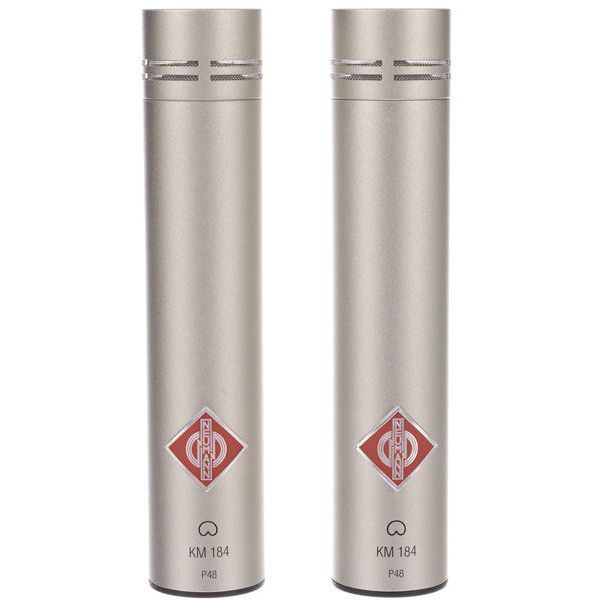
On stage it is mainly used to capture acoustic instruments (acoustic guitars, violins, wind instruments), drum overheads, grand pianos and, in controlled environments, vocals requiring high fidelity.
Polar patterns: which direction does the microphone "listen"?
A microphone's polar pattern defines from which directions it picks up sound and with what relative sensitivity. On stage, this characteristic is as important as the transducer type: it determines how much unwanted sound — monitors, nearby instruments, audience — the microphone captures, and therefore its propensity for feedback.
Cardioid
The cardioid pattern — named after its heart shape — picks up sound primarily from the front and rejects sound coming from the rear (approximately 180°). It is the most widely used pattern in live sound for its balance between capturing the desired source and rejecting the surrounding environment.
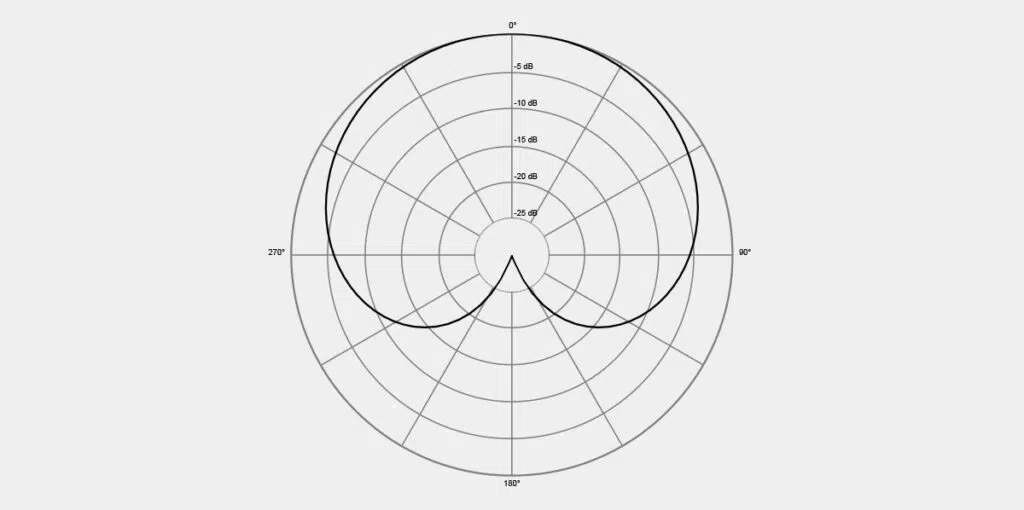
Stage monitors are placed directly behind the microphone to take full advantage of that rejection zone. It is the default option for vocals, amplified instruments and most concert applications.
Supercardioid and hypercardioid
These patterns are narrower variants of the cardioid: they capture a smaller frontal angle, which offers greater side rejection. This is particularly useful on stages with a high density of sources, where separation between instruments is critical.
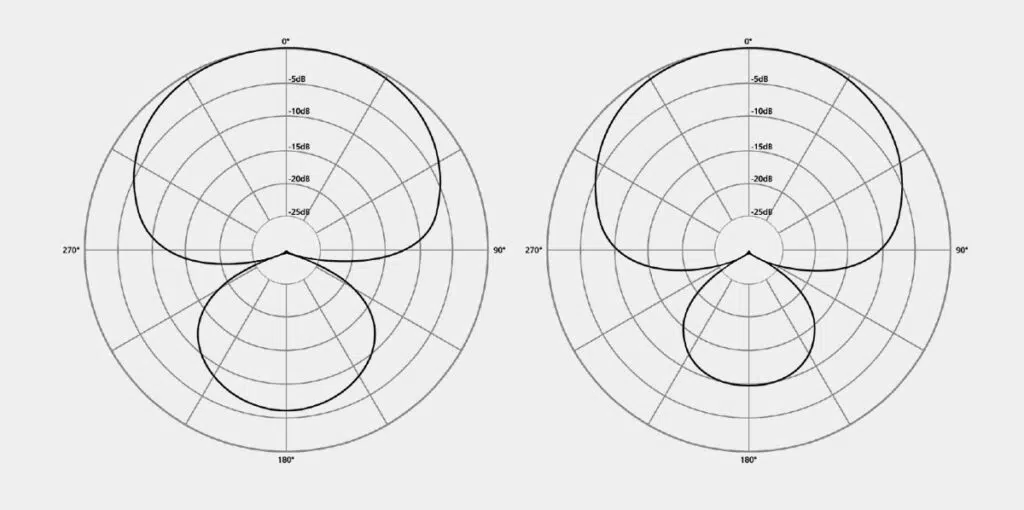
However, they have a more pronounced rear lobe than the cardioid: the supercardioid reaches maximum rejection at around 125° and the hypercardioid at around 110°, meaning they do pick up some sound from behind. For this reason, stage monitors must not be placed directly behind the microphone, but slightly offset to the sides.
Omnidirectional
An omnidirectional microphone picks up sound equally from all directions (360°). It offers a very natural frequency response and has no proximity effect, but is entirely unsuitable for use on stages with active monitors: unable to reject rear or side sound, the system feeds back very easily.
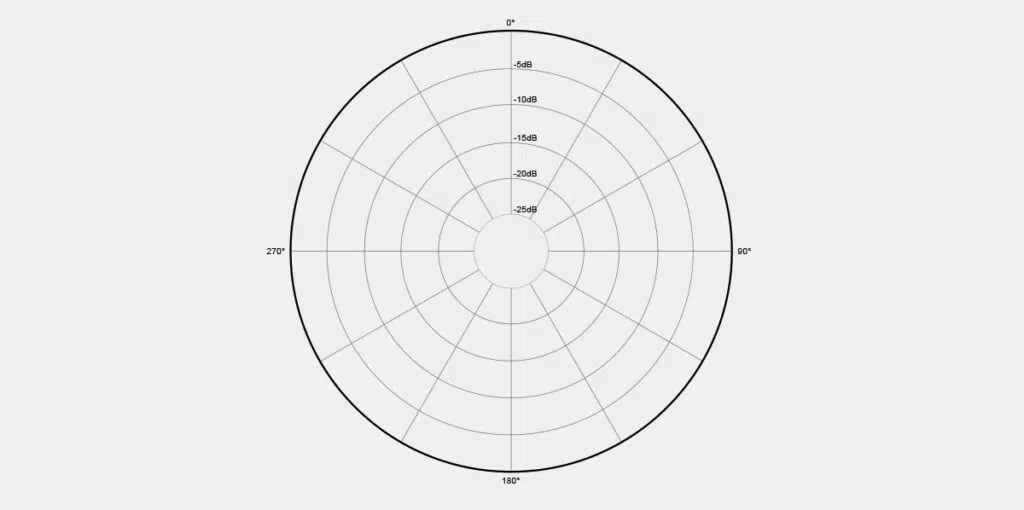
Its live use is confined to very specific situations without nearby monitors: lavalier microphones in theatre, headsets in conferences or situations where the acoustic environment is fully controlled.
Figure-of-8 (bidirectional)
The figure-of-8 pattern picks up sound equally from the front and the rear while completely rejecting the sides. It is the natural pattern of ribbon microphones. On stage it is rarely used, though it can be useful for capturing two facing sources (such as in an interview or certain choir recording techniques).
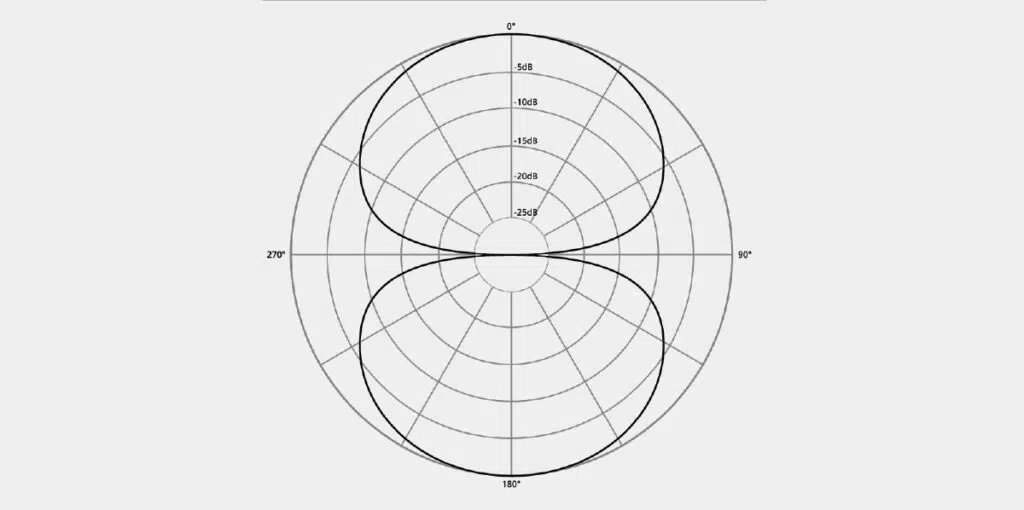
Polar patterns and monitor placement
- Cardioid: Monitor placed directly behind the microphone (at 180°).
- Supercardioid: Monitors at approximately 125° from the front axis (slightly offset from directly behind).
- Hypercardioid: Monitors at approximately 110° from the front axis.
- Omnidirectional: Not recommended with active stage monitors.
Types of microphone by format
Handheld microphone
The handheld microphone is the most common format at concerts. The performer holds it and directs it towards their mouth, allowing active control over the distance and angle of capture. Available in wired (XLR) and wireless versions. It is the default option for vocalists in live music concerts.

Headset microphone
The headset microphone is fixed to the performer's head via a headband, ear hook or similar support, keeping the capsule at a constant distance and position relative to the mouth. This guarantees a consistent and predictable signal level regardless of the artist's movements.
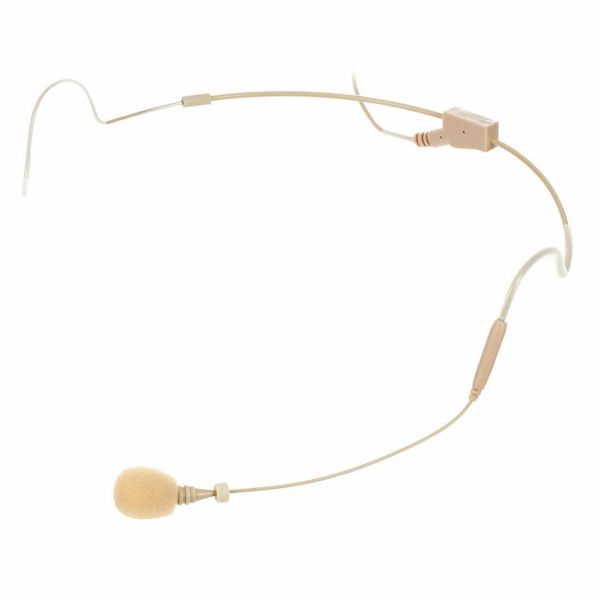
It is the reference solution in musical theatre, choreographed shows, presentations and fitness activities where the performer needs complete freedom of movement and both hands free. It is always used with a wireless bodypack transmitter.
Wireless microphone systems
A wireless system eliminates the physical cable between the microphone and the console. The audio signal is converted into a radio frequency signal by a transmitter (built into a handheld microphone or housed in a bodypack for headsets and lavaliers) and recovered by the receiver, which sends the signal via XLR cable to the mixing desk.
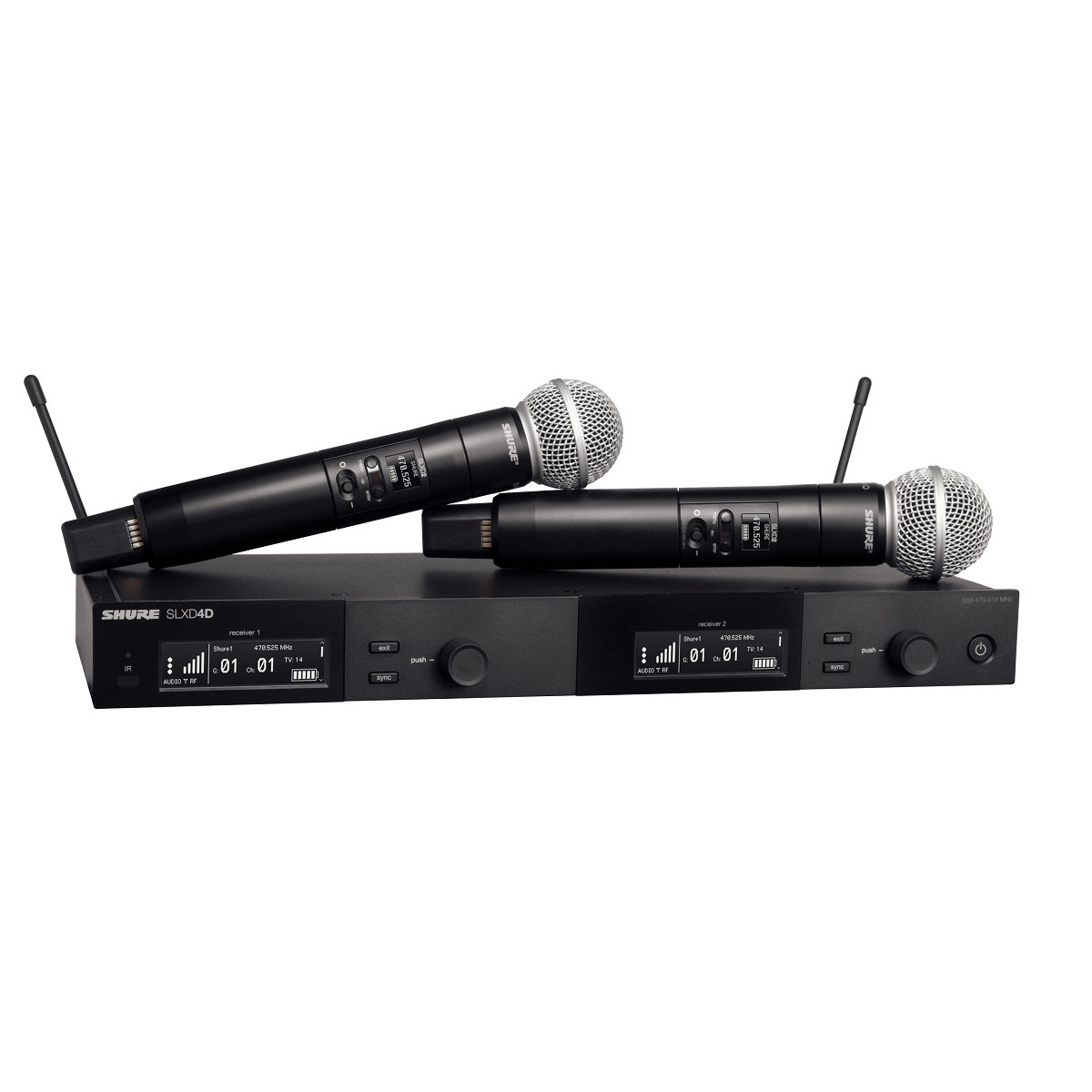
VHF vs. UHF
Wireless systems operate in two main radio frequency ranges:
- VHF (Very High Frequency, 30–300 MHz): More affordable and with longer battery life. However, they allow only a few simultaneous channels and are more susceptible to interference from other electronic equipment. Suitable for simple installations and semi-professional use.
- UHF (Ultra High Frequency, 300 MHz–3 GHz): The standard in professional productions. They allow multiple simultaneous channels without conflicts, offer greater stability and lower susceptibility to interference. Most professional systems operate in the 470–900 MHz range.
True Diversity: reliability in reception
A True Diversity receiver incorporates two antennas and two completely independent receiver circuits. Both continuously monitor the quality of the signal received and the system automatically selects whichever provides the best reception at any given moment. This mechanism virtually eliminates dropouts (momentary signal cuts) caused by reflections, obstructions or radio frequency interference.
In non-diversity systems, a single antenna can lose the signal when the transmitter enters a dead zone. True Diversity resolves this problem transparently and is the reference system in any professional production with more than one or two wireless channels.
Digital wireless systems
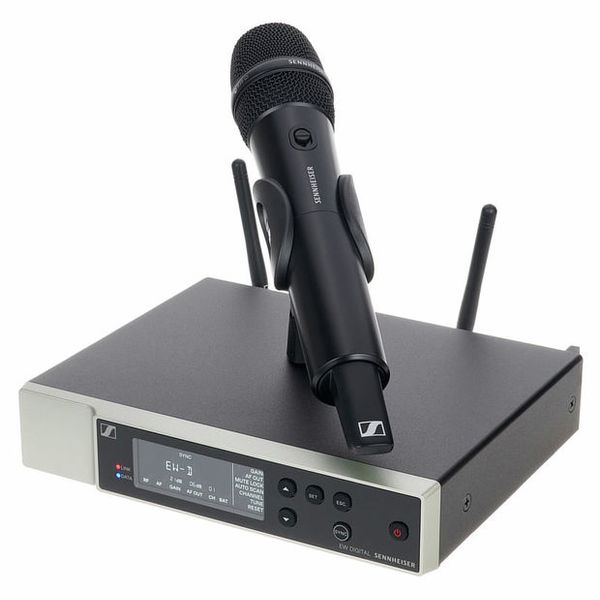
Digital wireless systems convert the audio signal to digital format before transmitting it over radio frequency. They offer additional advantages over analogue UHF systems: greater immunity to noise, the possibility of signal encryption and, in some cases, predictable and constant latency. They are the cutting-edge option for large productions and international touring.
Phantom power: powering condenser microphones
Phantom power is a +48V voltage that the mixing console sends through the XLR cable itself to the microphone, without interfering with the audio signal. It is essential for the operation of all condenser microphones.
Dynamic moving-coil microphones do not need it and are unaffected by it. However, some passive ribbon microphones can be damaged if phantom power is accidentally applied, so compatibility should always be verified before activating it on any channel.
On the mixing console, phantom power can be activated globally (for all channels) or per individual channel, depending on the console model. The standard recommendation is to activate it only on channels that genuinely require it.