In the field of sound, the principle of transduction is defined as the process by which one form of energy is converted into another. Specifically, it refers to the conversion between acoustic energy (sound waves traveling through the air) and electrical energy.
Etymologically, the word comes from the Latin trans ("across") and ducere ("to lead"), which literally means to lead something through a medium.
What is a transducer?
A transducer is the physical device capable of performing this energy conversion. In audio, they are mainly classified into two groups according to the direction of the conversion:
- Input transducers: These capture sound and transform it into an electrical signal. The most common example is the microphone.
- Output transducers: These receive an electrical signal and transform it back into physical vibrations that we perceive as sound. Examples include loudspeakers and headphones.
How does this process occur?
First, sound pressure waves in the air strike a sensitive physical surface, generally a diaphragm, causing it to vibrate in accordance with the frequency and amplitude of the incident wave.
The diaphragm’s kinetic energy is then transferred to an internal element, which may be a coil, a plate, or a capacitor, depending on the device architecture.
This mechanical movement is ultimately translated into an electrical current or voltage that constitutes an exact replica of the original acoustic waveform.
The quality of the transducer can determine the sonic fidelity of audio capture or reproduction, as it directly influences the integrity of the signal during the energy conversion process.
If a transducer is of low quality, negative effects such as distortion, noise, or frequency loss may be introduced into the audio.
Types of transducers
Transducers can be classified in two main ways: according to their function (direction of energy conversion) and according to their physical operating principle.
Below are the types of transducers based on their internal mechanism:
Electromagnetic transducers
They operate through the phenomenon of electromagnetic induction. In these devices, a moving coil is suspended within a magnetic field created by a magnet.
When sound waves cause a diaphragm attached to the coil to vibrate, the coil moves and generates an electrical current. In loudspeakers, the process is reversed: the electrical signal moves the coil, which in turn drives the cone to produce sound.
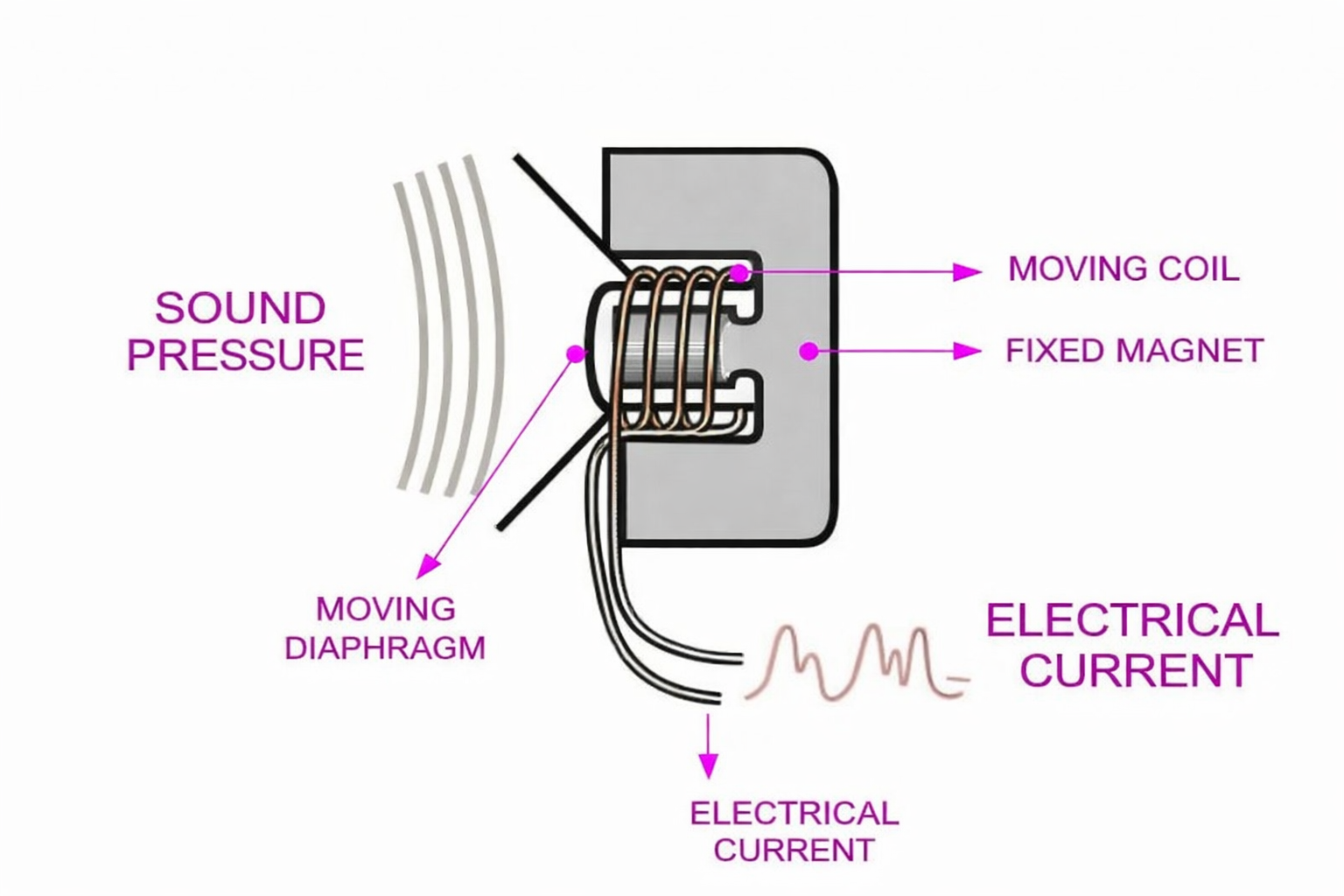
They are robust, durable devices and do not require external power. However, their frequency response is generally less precise than other systems.
Examples include dynamic microphones and most conventional loudspeakers.
Electrostatic (Capacitive) transducers
These devices use the principle of a capacitor, formed by two thin metal plates (one fixed and one movable).
Sound waves move the movable plate, varying the capacitance between them and converting that movement into an electrical signal.
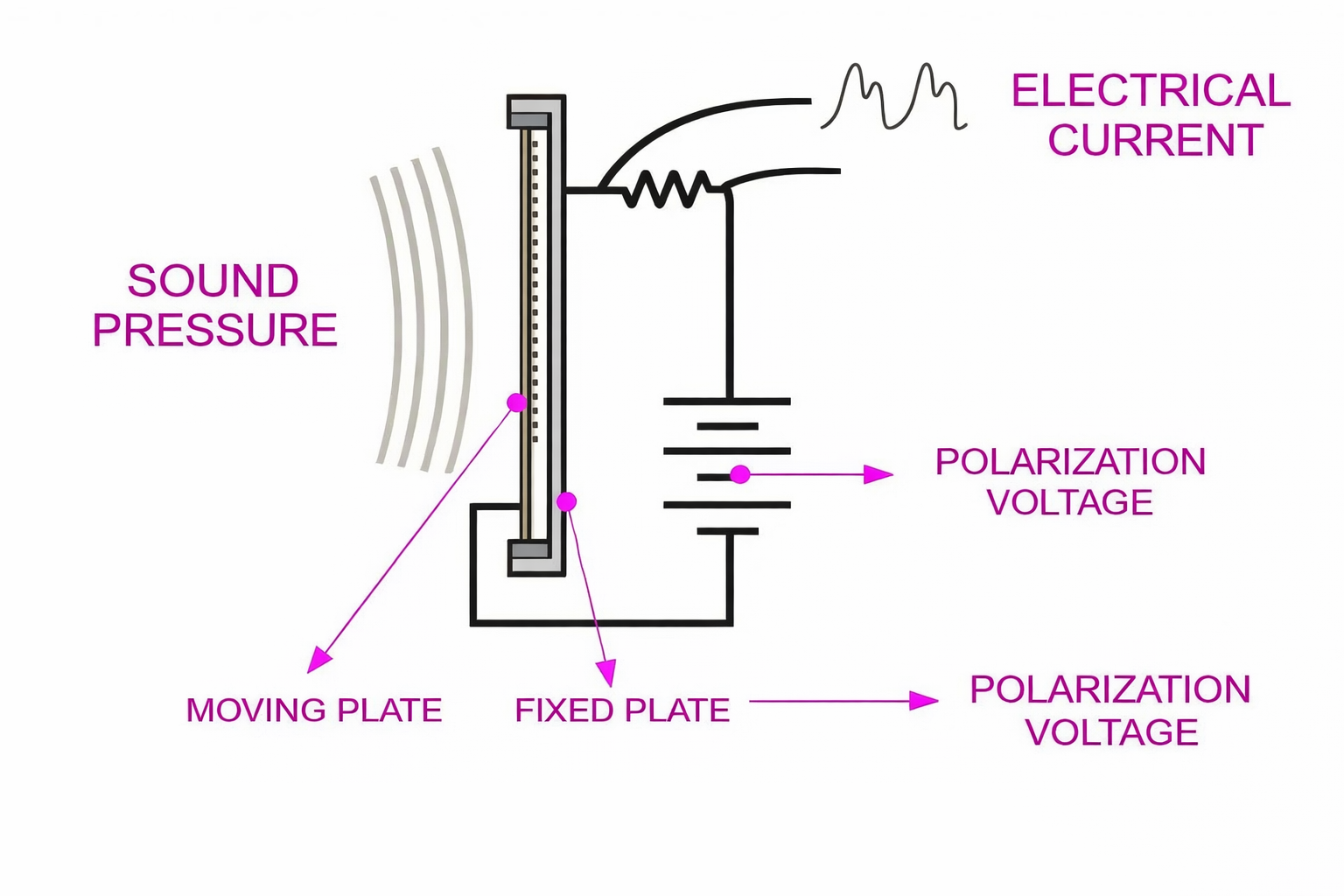
These devices stand out for their high sensitivity and great sonic accuracy. On the downside, they are more fragile and require an external power supply to maintain the charge between the plates.
Examples include condenser microphones and high-fidelity electrostatic headphones.
Piezoelectric transducers
They are based on specific materials, such as quartz or ceramic, that generate electricity when mechanically deformed.
The material vibrates when it receives mechanical energy (or electrical energy in the reverse direction) and generates a potential difference. They are ideal for capturing sound through solid surfaces without requiring air as a medium.
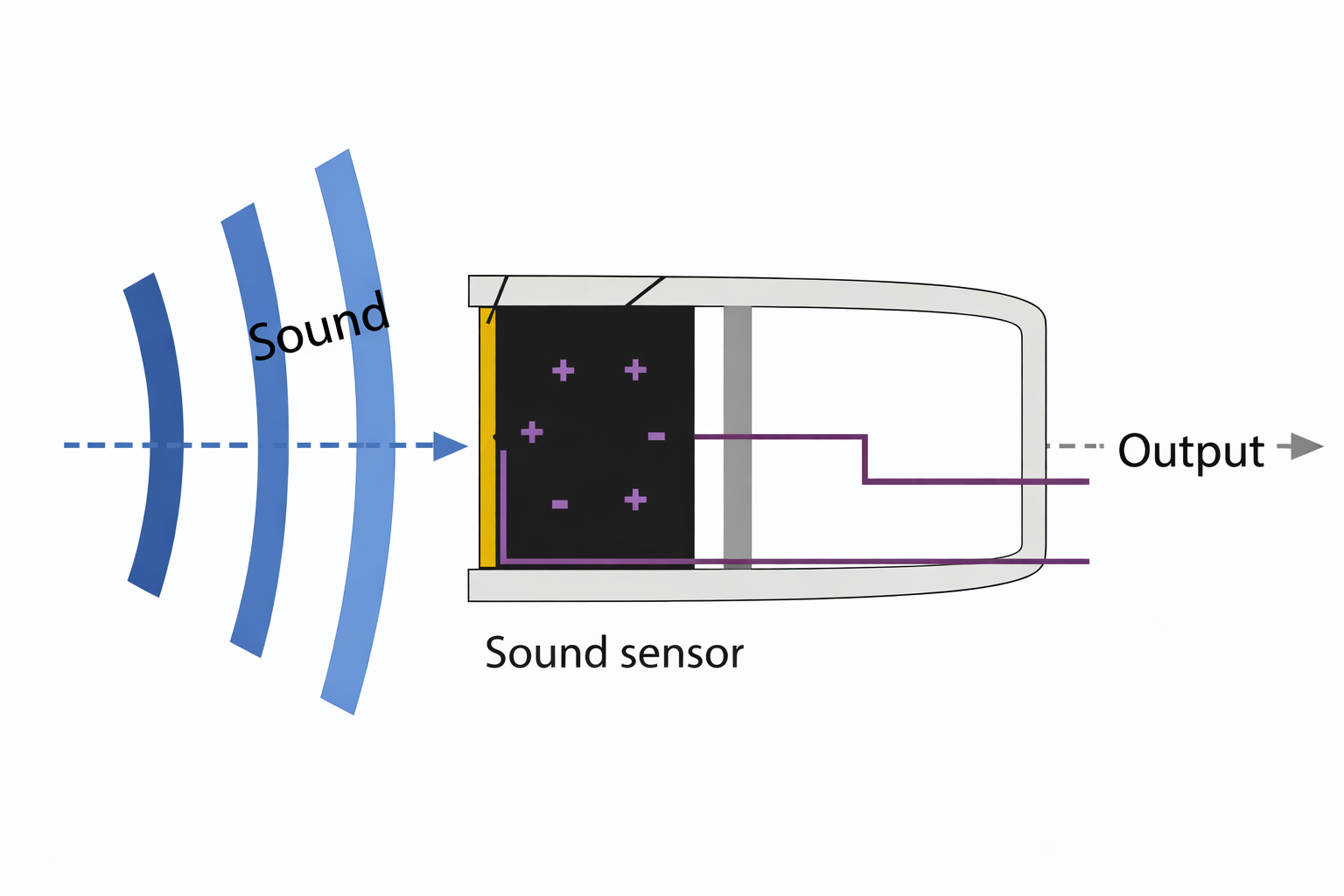
They are highly resistant to environmental conditions (humidity, temperature), produce a strong signal, and do not require power. However, their frequency response is not as flat, as they tend to emphasize certain frequencies and do not capture low frequencies well.
Examples include contact microphones and pickups for acoustic instruments such as guitars or violins.