Acoustic absorption is a phenomenon in which a sound wave loses part of its energy when interacting with a surface or material. Instead of being reflected, that energy is dissipated within the material, generally transforming into heat through molecular friction.
The degree to which a material absorbs sound is measured by the acoustic absorption coefficient (α), whose value ranges from 0 (no absorption) to 1 (total absorption).
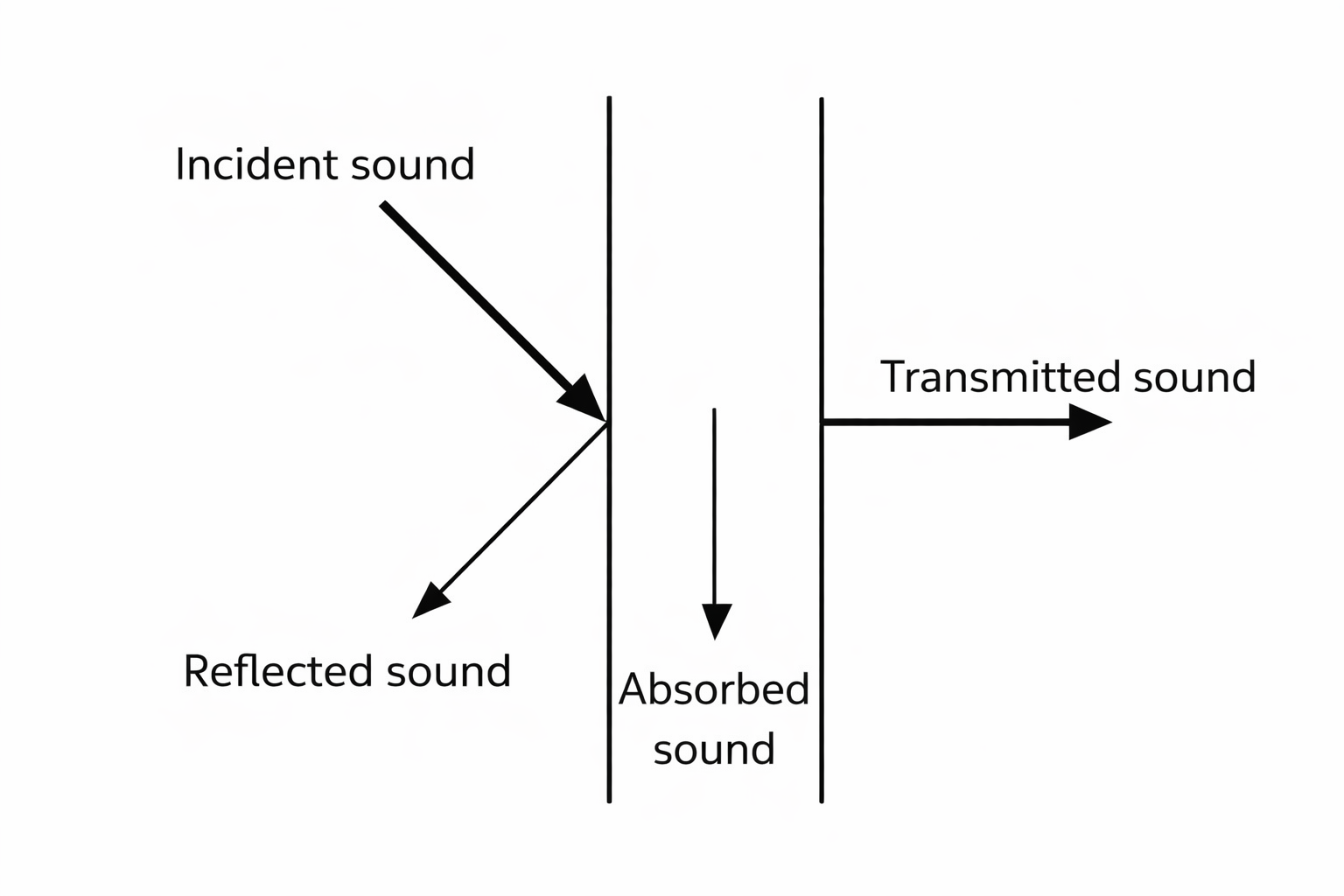
Factors that influence absorption
To understand acoustic absorption in depth, it is necessary to analyse how the physical properties of materials interact with the nature of sound waves. The determining factors are as follows:
Material type and internal structure
A material's ability to dissipate energy depends on its composition:
- Porous materials: Such as acoustic foam, rock wool, or fibreglass, are highly effective because they trap waves within their structure of small pores. Sound energy is converted into heat through the molecular friction of air as it tries to pass through these cavities.
- Rigid and smooth materials: Glass or metal have minimal absorption capacity, as their surface causes most sound to be reflected back into the medium.
- Resonant and membrane systems: Unlike porous materials, membrane absorbers (such as wooden panels with an air cavity) vibrate upon receiving the impact of sound to dissipate energy. Resonant absorbers (such as perforated panels) are designed to "tune in" to and capture specific frequencies.
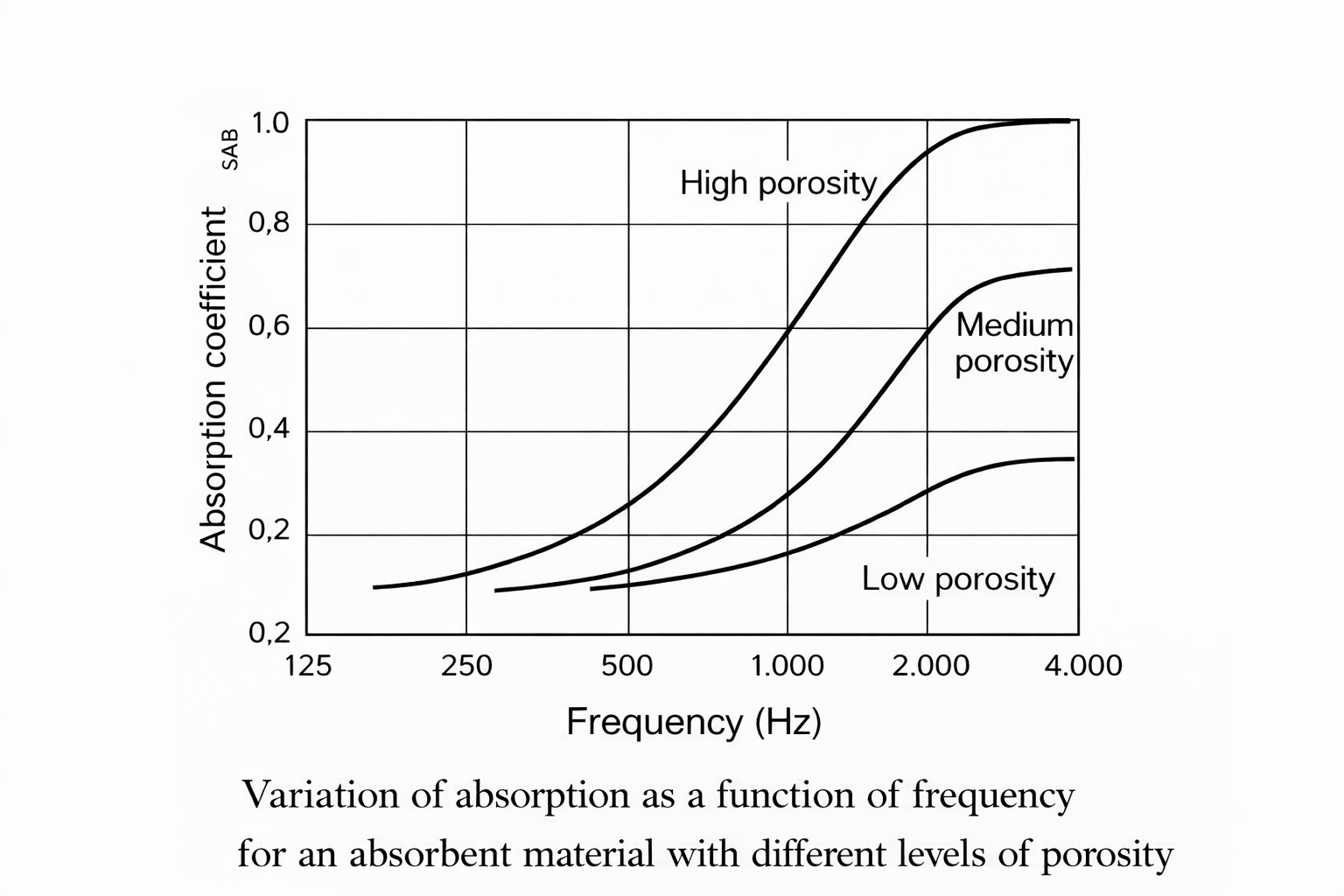
Material thickness and wavelength
The thickness of the absorber must be related to the wavelength of the sound to be controlled:
- Low frequencies (bass): Have very long waves (for example, a 100 Hz wave measures around 3.4 metres). To absorb them, the material must be thick or dense enough for the wave to penetrate and lose energy within its internal structure.
- High frequencies (treble): Have short waves (a 5 kHz wave measures only 6.8 cm), so thinner materials, such as fabrics or thin foam, are sufficient to dissipate them.
Strategic placement
The strategic placement of absorbing materials is very important because sound does not distribute evenly in a room — it interacts with surfaces following specific physical patterns.
To achieve effective acoustic control, it is not enough to cover the walls with material. It is necessary to identify the primary reflection points: the exact locations where sound waves first strike a surface after leaving the source. Treating these points is vital for reducing unwanted echoes and improving the intelligibility and clarity of what is heard.
Care must also be taken with corners, as low frequencies have a natural tendency to accumulate in these angles, generating resonances that can muddy the sound. For this reason, bass traps are installed there — dense, thick devices designed specifically to capture the energy of these long waves before they cause acoustic problems.
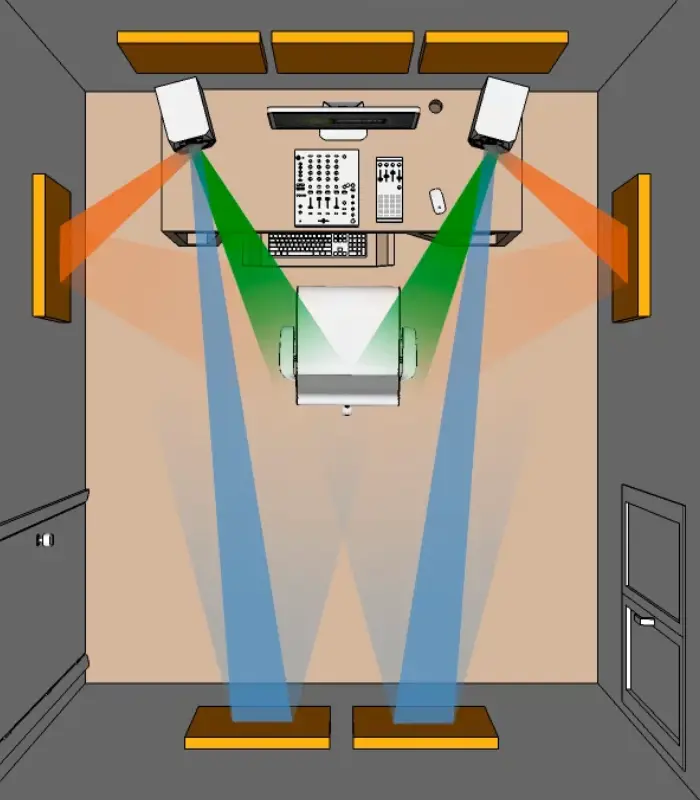
The ultimate goal of intelligent placement is not to eliminate all sound energy, which would make the space feel "dead" or overly dry, but to achieve an optimal balance between absorption and reflection.
Acoustic absorption coefficient
The acoustic absorption coefficient (α) is the measure used to determine the degree of absorption of a specific material. This value indicates what proportion of the incident sound energy is dissipated within the material — generally converted into heat through molecular friction — rather than being reflected back into the space.
This coefficient is expressed on a numerical scale ranging from 0 to 1:
- A value of 0 represents zero absorption, meaning sound is entirely reflected or transmitted.
- A value of 1 represents total absorption of the sound wave's energy.
It is a dynamic factor, as the absorption capacity of the same material can vary significantly depending on the frequency of the sound (bass, mid, or treble), its thickness, and its internal composition (porous, membrane, or resonant).
When we cover acoustic treatment, you will learn how to use the absorption coefficient of materials to calculate the reverberation of a room and how to treat it acoustically.