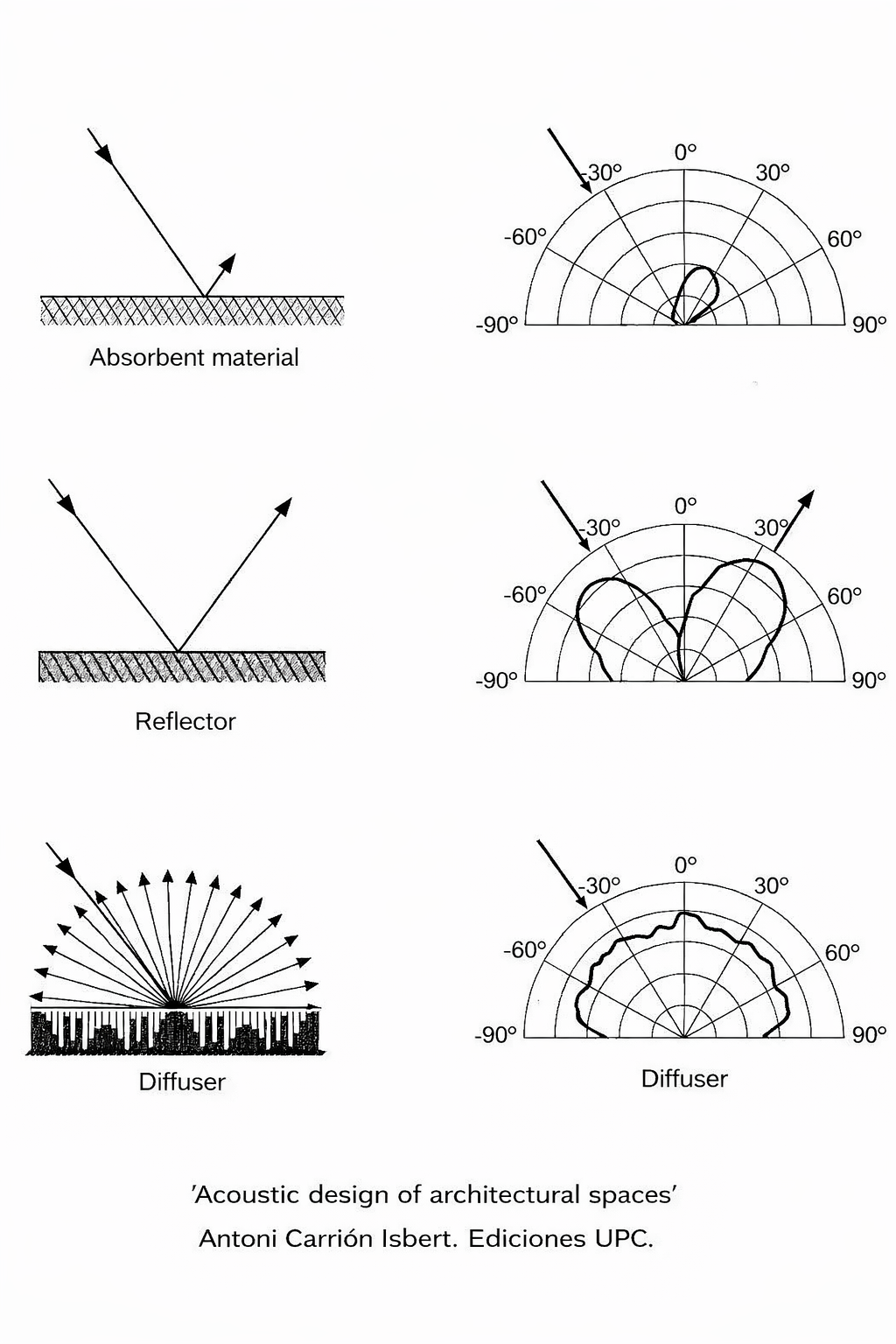
Acoustic diffusion is the process by which sound waves scatter in multiple directions when interacting with surfaces specifically designed to distribute sound evenly throughout a space.
Unlike acoustic absorption, which reduces sound energy by converting it into heat, diffusion preserves that energy, allowing a "live" and natural acoustic character to be maintained without the space feeling excessively dampened or "dead".
Benefits of acoustic diffusion
Implementing diffusion in a room prevents sound from bouncing in a direct and concentrated manner, which could distort clarity and the stereo image. It also helps sound feel enveloping and improves spatial perception, contributing a sense of "depth" and "air" to the environment.
It also minimises unwanted resonances that commonly occur between untreated parallel surfaces, and in conference rooms or cinemas it ensures that speech and effects can be heard clearly from any position.
Diffusers
While a flat surface reflects sound at an angle equal to that of incidence (following the law of reflection), a diffuser uses irregular geometric surfaces. When the sound wave's energy strikes these irregularities, it is divided and propagated across multiple angles and directions, eliminating sound concentration points.
Different designs exist depending on the frequencies that need to be treated and the available space:
Geometry-based diffusers
These rely primarily on their physical shape to redirect sound waves.
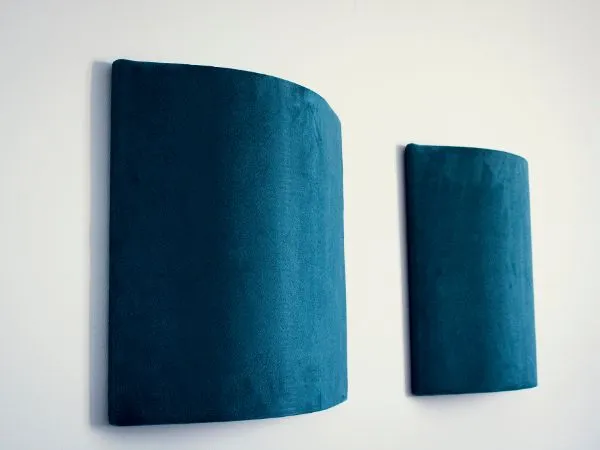
Among them are polycylindrical diffusers — panels with a convex curvature (radius under 5 metres). Their function is purely geometric: being a curved surface, incident sound "bounces" outwards to the sides rather than concentrating at a single point. They are highly effective for mid and high frequencies, and have the advantage of being straightforward to construct.
Mathematical sequence diffusers (Schroeder)
These are more advanced because they not only scatter sound spatially but also affect the phase of the wave, achieving a far more uniform distribution.
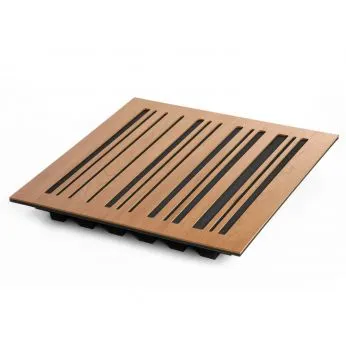
- MLS (Maximum Length Sequence): These use a flat surface with slots whose distribution and depth are based on mathematical binary sequences. One of their greatest advantages is that they exhibit lower absorption at low frequencies compared to QRD or PRD designs, which helps retain the warmth of the bass in the room.
- QRD (Quadratic Residue Diffuser)
- One-dimensional (1D): Consists of parallel slots of equal width but mathematically calculated depths. These diffuse sound in a single plane (typically horizontal if the slots are vertical).
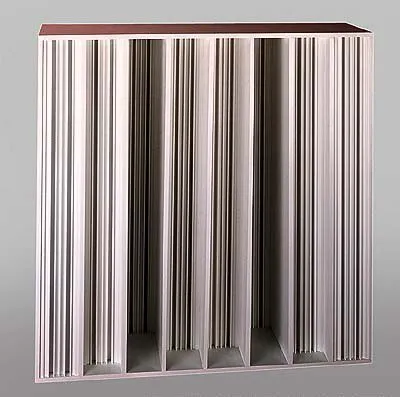
- Two-dimensional (2D): Replaces slots with square wells of varying depths. This allows sound to scatter hemispherically (in all directions), making it ideal for ceilings or rear walls in critical listening rooms.
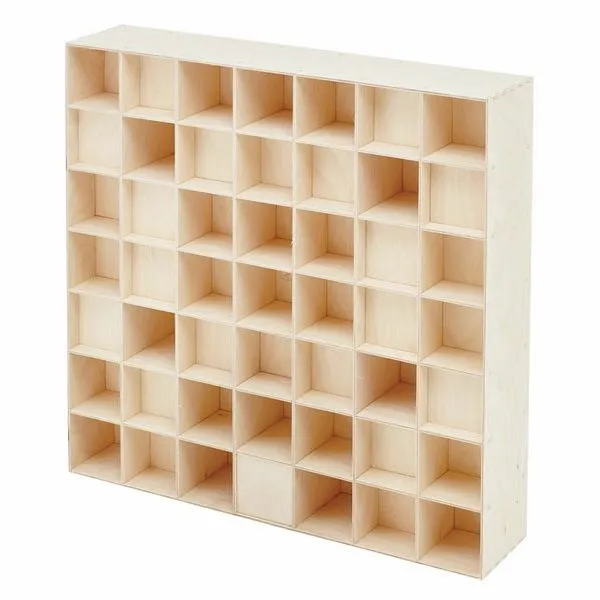
- One-dimensional (1D): Consists of parallel slots of equal width but mathematically calculated depths. These diffuse sound in a single plane (typically horizontal if the slots are vertical).
- PRD (Primitive-Root Diffuser): Although similar in appearance to QRDs, these use a numerical sequence based on primitive roots. This helps avoid certain reflection "lobes" that QRDs can sometimes produce, achieving an even more random and natural diffusion pattern.
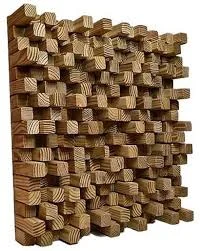
The depth of the wells in a QRD or PRD diffuser determines the lowest frequency it can diffuse. The deeper the diffuser, the greater its ability to act on low frequencies. Conversely, the width of the wells determines the upper frequency limit (very high frequencies require very narrow wells).