There is no single model of recording studio. From a bedroom with a laptop and headphones to a multi-room installation covering several hundred square metres, the concept of a "studio" encompasses a very wide range of configurations with very different objectives, budgets and workflows. Understanding the differences between them is the first step towards knowing which space best suits each project.
The bedroom studio
The bedroom studio — literally a "bedroom studio" — is the most basic and accessible setup. It is installed in an everyday-use room with no dedicated recording space, and its minimum equipment consists of a computer with a DAW, a one- or two-input audio interface, headphones and, optionally, a microphone.
Its defining characteristic — and also its main limitation — is the absence of acoustic treatment. A domestic room is not designed for recording: it has uncontrolled reflections, external background noise and dimensions that generate resonant frequencies. This does not prevent producing quality music — particularly in electronic genres where sound is generated digitally — but it does limit microphone recordings, especially vocals and acoustic instruments.

It is the starting point for the vast majority of independent producers and performers. Current technology has lowered the entry barrier to the point where a functional recording and production chain is achievable for under €500.
Ideal for:
- Electronic music production and beatmaking.
- Pre-production and demos.
- Podcasting and voice-over work with acoustics managed through post-production processing.
- Composition and arrangement without the need for microphone recording.
The home studio
The home studio takes a significant step forward from the bedroom studio: it occupies a dedicated space within the home, used solely for recording and production. This might be a spare room, a garage, a basement or any space that allows a permanent setup without the need to assemble and disassemble the equipment for each session.
This exclusivity of space allows improvements that are impractical in a bedroom studio:
- Basic acoustic treatment: Absorptive panels at the first reflection points, bass traps in the corners and diffusers on the rear wall, which significantly improve the room's acoustic response and the reliability of mixing decisions.
- Studio monitors: A permanent setup allows the listening position to be optimised relative to the monitors — something impossible in a shared space. Monitors provide a more detailed and accurate frequency picture than headphones for making mixing decisions.
- More channels: Interfaces with 8, 12 or more inputs allow real instruments to be recorded with multiple microphones simultaneously.
- Additional equipment: External preamplifiers, compressors, rack equalisers and processors that expand the sonic possibilities beyond what the DAW alone can offer.

A well-configured home studio can deliver professional-quality results in genres that do not require the acoustics of a large room. Its main limitations remain low-frequency acoustics (difficult to control in small domestic spaces) and the inability to record ensembles of several musicians playing simultaneously.
The semi-professional or rehearsal-recording studio
Sitting midway between the home studio and the professional studio, the semi-professional studio is a commercial facility with an intermediate level of investment and equipment. It is typically aimed at local bands, emerging artists or projects with limited budgets that need a physically superior space to a domestic setup but cannot access the rates of a top-tier studio.
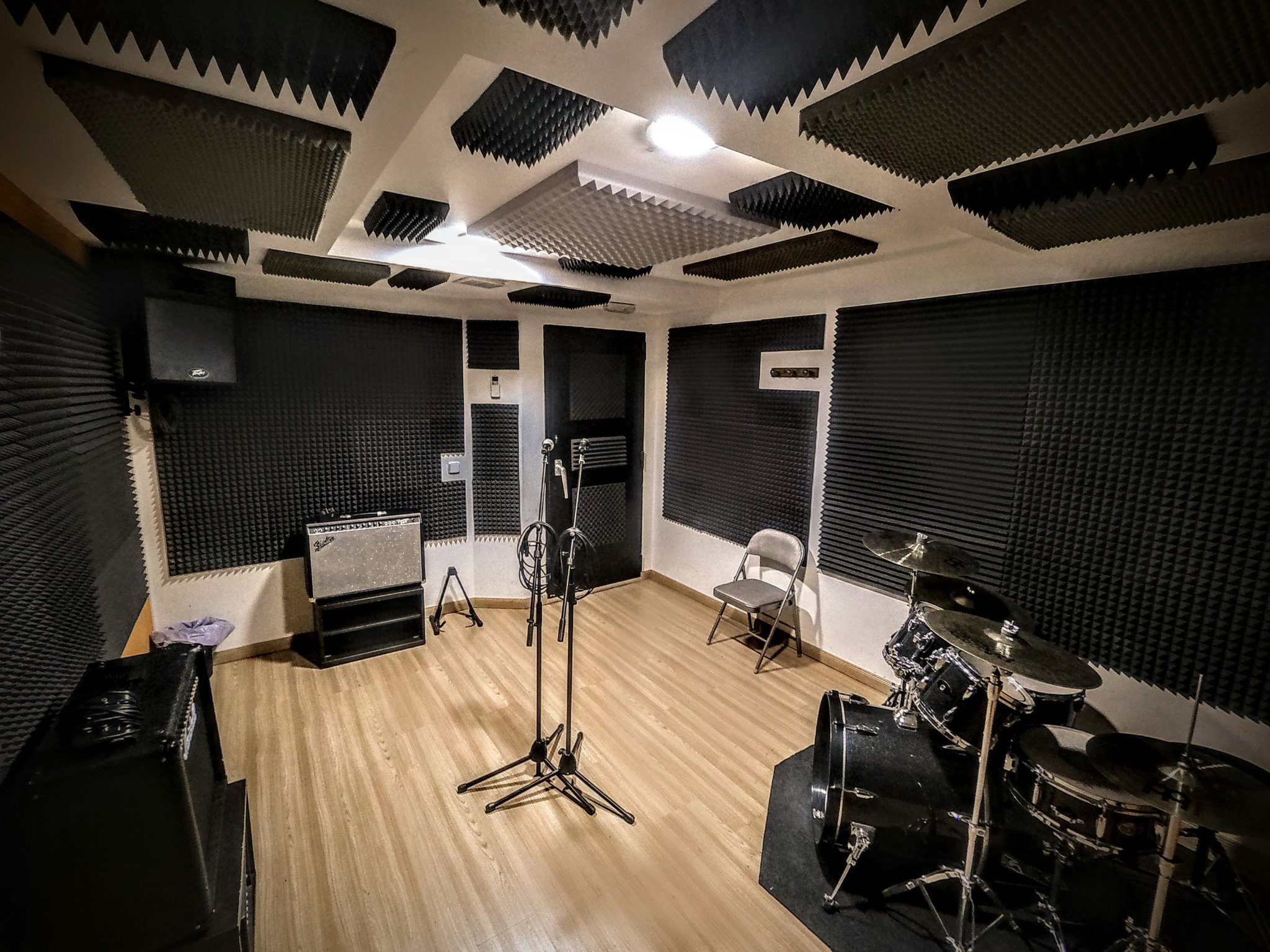
It frequently shares premises with a rehearsal room, which allows bands to move directly from rehearsal to recording without adapting to an unfamiliar environment. It usually has a separate recording room and control room, though with less floor area and a smaller acoustic investment than a professional studio.
The professional recording studio
The professional recording studio represents the highest level of technical, acoustic and equipment investment. It is designed to meet the needs of any type of project — from a solo artist to a full orchestra — with the highest possible quality at every stage of the process.
Its defining characteristic is the physical separation into specialised rooms, each acoustically designed for a specific function.
The recording room (live room)
This is the space where musicians and performers deliver their performance in front of the microphones. Its acoustic design seeks a balanced reverberation time and the absence of unwanted reflections, using materials that control the room's frequency response. In top-tier studios, the room may have variable acoustics: movable panels that allow it to shift from a drier to a more reflective environment depending on the project's needs.
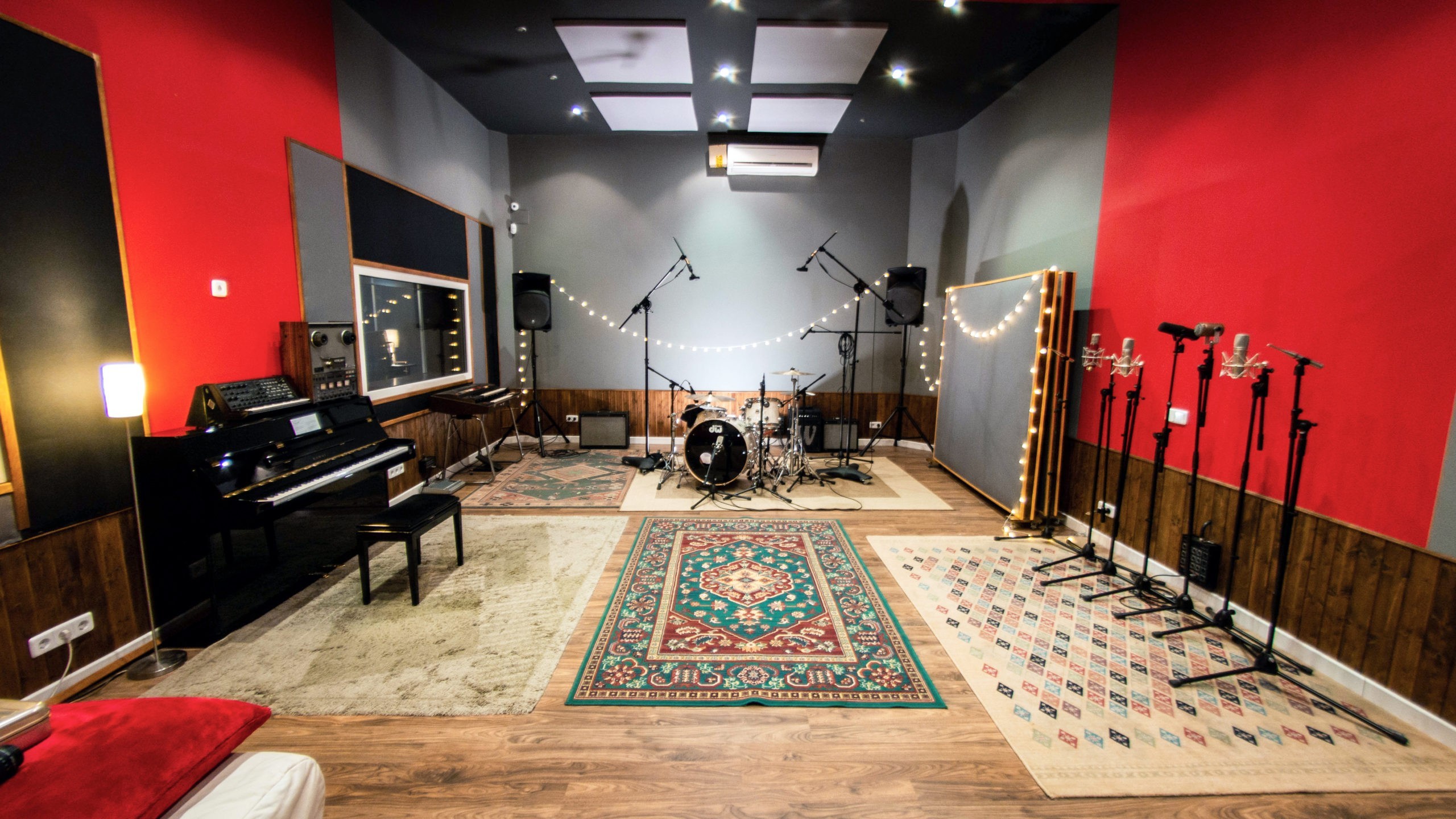
The floor, walls and ceiling are built with floating and isolation systems that eliminate noise transmission to and from the exterior of the building.
The control room
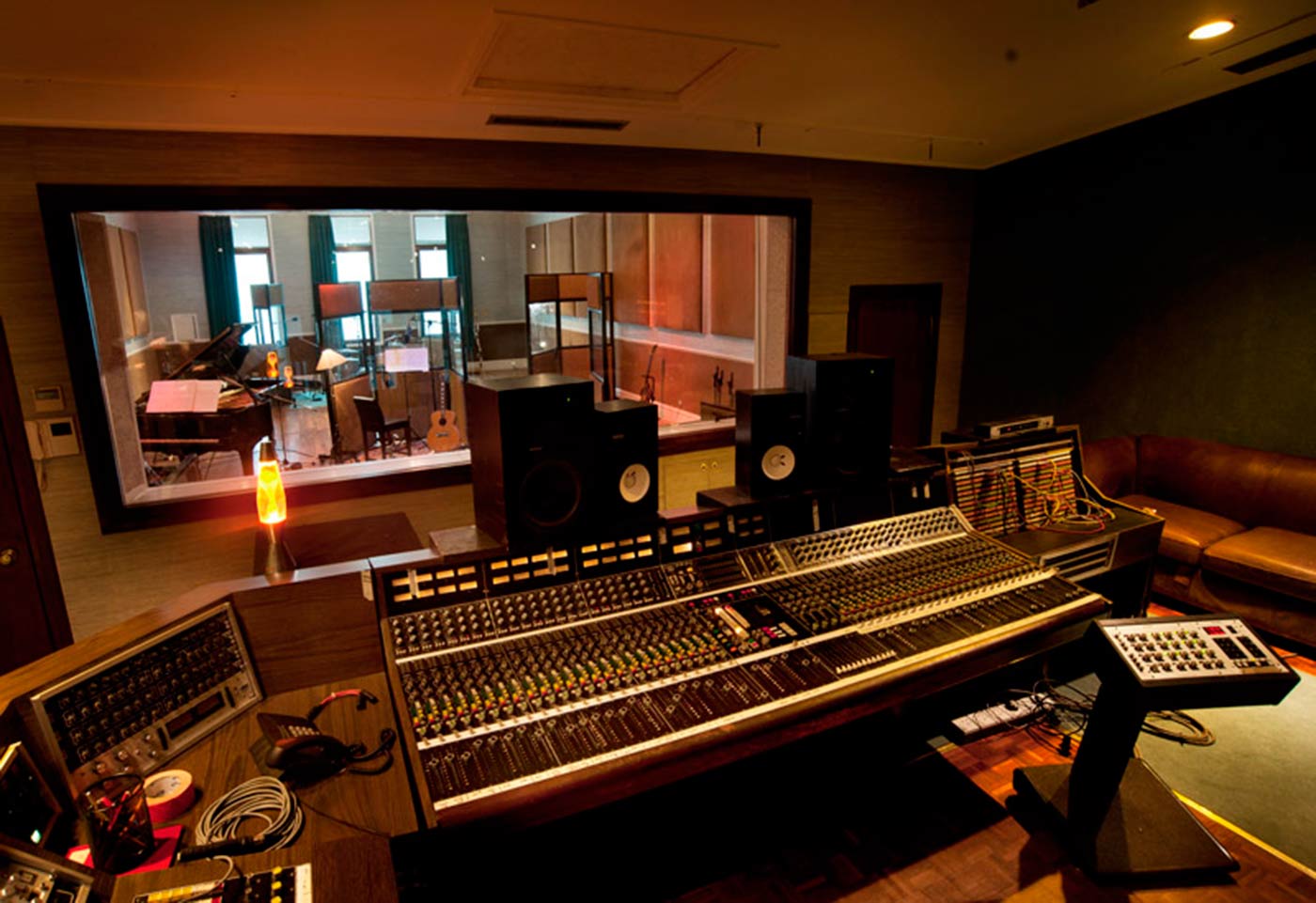
This is the space where the sound engineer operates the mixing console, reference monitors and all the recording and processing equipment. It is where all technical and creative decisions are made during the session.
Its acoustic design is the most critical in the entire studio: the goal is for the monitors to reproduce sound with the greatest possible accuracy, with no colouration from the room itself. This requires advanced acoustic treatment techniques and meticulous attention to the listening position relative to the speakers and walls.
Isolation booths
These are smaller spaces, visually connected to the recording room through a window, that allow particularly loud sound sources or sources requiring a very dry environment to be isolated:
- Drum booth: Isolates the drum kit from other instruments to prevent bleed between microphones.
- Vocal booth: A small, acoustically very dry space where the singer records without room reflections. This allows the producer or engineer to add the desired reverb in the mix, without being locked into the recording space's natural sound.
- Amplifier booth: A space for guitar or bass amplifiers so that their volume does not contaminate the sound of the main room.
The mastering studio
The mastering studio is a facility specialised exclusively in the final stage of the music production chain. Its purpose is not to record or mix, but to optimise the finished mix delivered by the mixing engineer so that it is ready for distribution: consistent on any playback system, with the perceived loudness level appropriate to the standards of streaming platforms, radio or vinyl.
The most critical element of a mastering studio is its listening room: it must be the most precise and neutral acoustic environment possible, with no colouration of its own and an absolutely flat frequency response from the deepest bass to the highest treble. This is why the acoustic design investment in these facilities is proportionally greater than in any other type of studio.
The mastering engineer is a specialist with a highly calibrated ear and an objective perspective on the material, having not been involved in the recording or mixing process. Their experience with the standards of different genres, formats and platforms is as important as the equipment they use.
The post-production studio
The audio post-production studio is oriented towards audio work for picture: film, television, advertising and video games. Unlike a music studio, its workflow is synchronised with a picture reference (the edited video cut) and its deliverables are produced in formats specific to each platform or medium.
Tasks carried out in these studios include:
- Dialogue editing and cleaning: Removing background noise, correcting production recording problems and optimising voice intelligibility.
- ADR (Automatic Dialogue Replacement): Re-recording dialogue in the studio when the production audio is unusable.
- Sound design: Creating and editing sound effects that accompany the picture.
- Final mix (dub): Summing and balancing all sonic elements (dialogue, music and effects) in the final delivery format.

Many of these studios are equipped to work in immersive audio formats such as Dolby Atmos or Sony 360 Reality Audio, which require multi-channel monitoring systems with speakers positioned around and even above the listening point.
The Foley studio
The Foley studio is a specialised variant of the post-production studio, dedicated exclusively to recreating and recording sound effects synchronised to picture. It takes its name from film sound pioneer Jack Foley, whose technique of recreating everyday sounds in sync with on-screen action became a standard discipline of the audiovisual industry.

Its defining feature is the presence of different walking surfaces on the floor (wood, tile, gravel, sand, artificial grass) and a collection of props and sound objects that the Foley artist uses to recreate sounds: footsteps in different types of footwear, clothing movement, impacts, rustles and all manner of physical sounds that the picture requires but that could not be adequately captured during the shoot.
Summary: which type of studio does each project need?
- Electronic production, demos, podcasting: Bedroom studio or home studio.
- Local bands, emerging artists with limited budgets: Semi-professional studio.
- Acoustic instruments, orchestras or high-level projects: Professional studio.
- Final stage before distribution: Mastering studio.
- Audio for film, television or video games: Post-production studio.
- Sound effects for picture: Foley studio.